
In this guide
Who this guide is for
Readers researching men's health and seeking structured, objective information on this topic.
Summary
Testosterone replacement therapy (TRT) replaces testosterone in men with clinically diagnosed hypogonadism; it is not a general vitality supplement. A sound pathway combines relevant symptoms, two separate morning blood tests, evaluation for reversible causes, informed choice, and continuing safety monitoring. Telehealth can fill access and continuity gaps, but no legitimate service can guarantee a prescription, and availability depends on the clinician, pharmacy, federal rules, and the state where the patient is located.
TRT is replacement treatment—not a testosterone booster
Testosterone replacement therapy supplies testosterone from outside the body to treat hypogonadism: a clinical condition in which the testes do not produce enough testosterone because of a testicular, pituitary, or hypothalamic problem. FDA-approved testosterone products include several delivery forms, each with different tradeoffs. This guide deliberately gives no dosing or administration instructions; formulation and treatment targets belong in an individualized prescribing conversation.
TRT is not the same as an over-the-counter “testosterone booster.” Supplements commonly combine vitamins, minerals, or herbs and do not replace testosterone. Product quality and evidence vary, and a “natural” label does not establish that a product corrects diagnosed hypogonadism. TRT is also not the same as enclomiphene. Enclomiphene is a selective estrogen receptor modulator intended to stimulate the body's signaling to make more testosterone; it is not FDA-approved as a treatment for male hypogonadism. Some telehealth companies offer it, often compounded, but calling that TRT blurs an important difference.
The patient-control principle
Control means seeing your results, understanding the diagnosis and alternatives, choosing whether expected benefit is worth the burdens, keeping copies of records, and being free to seek a second opinion. It does not mean a guaranteed prescription on request.
Step one: connect symptoms to the right testing
Symptoms can justify a conversation, but they do not diagnose testosterone deficiency. More specific clues include reduced libido, fewer spontaneous erections, erectile difficulty, loss of body hair, reduced testicular volume, infertility, hot flashes, and low bone density. Less specific concerns—fatigue, lower motivation, irritability, depressed mood, reduced strength, increased body fat, and trouble concentrating—matter too, but have many possible causes.
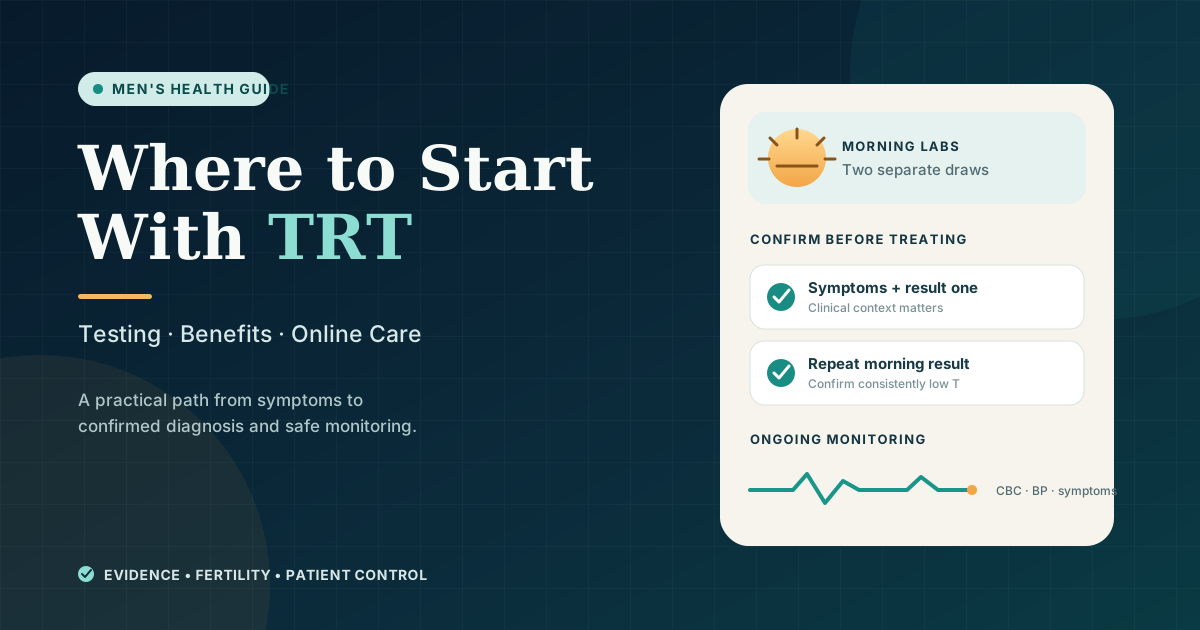
The Endocrine Society recommends diagnosing hypogonadism only in men with compatible symptoms or signs and unequivocally and consistently low testosterone. It recommends an accurate morning fasting total-testosterone test and confirmation by repeating a morning fasting measurement 1. In practical terms, expect two separate morning blood draws, not one borderline result taken late in the day. A clinician may assess free testosterone when total testosterone is near the lower limit or when a condition may alter sex hormone–binding globulin.
Testing is the beginning of reasoning, not the end. Acute illness, severe calorie restriction, sleep loss, certain medicines, obesity, uncontrolled diabetes, heavy alcohol use, and opioid or glucocorticoid exposure may lower testosterone or mimic its symptoms. Luteinizing hormone and follicle-stimulating hormone can help distinguish a testicular problem from a pituitary/hypothalamic one; selected patients may need prolactin, iron studies, thyroid testing, pituitary evaluation, or fertility workup. The goal is to find a reversible contributor or important underlying condition rather than automatically converting a number into a lifetime purchase.
- Write down the symptoms that affect daily life, when they began, sleep quality, medicines and supplements, prior head or testicular injury, and reproductive plans.
- Ask for properly timed, accurate testing and retain the actual values, units, laboratory reference ranges, and collection times.
- Confirm a low result on a different morning before treatment; ask what could have temporarily or reversibly lowered it.
- Discuss whether the pattern suggests primary or secondary hypogonadism and whether another evaluation should happen first.
- Define success in concrete terms—such as improved libido or correction of anemia—and agree when to reconsider therapy if that goal is not met.
Potential benefits—and where certainty runs out
For a man with symptomatic, confirmed deficiency, restoring testosterone can be meaningful. The American Urological Association says patients should be told that therapy may improve erectile function, low sex drive, anemia, bone mineral density, lean body mass, and depressive symptoms 2. “May” is doing important work: not every symptom comes from testosterone, and normalizing a laboratory value does not guarantee that a person will feel different.
Sexual outcomes have the clearest evidence, but average effects can still be modest. In men whose low testosterone is primarily age-related, the American College of Physicians found small improvements in sexual and erectile function and advised against starting therapy to improve energy, vitality, physical function, or cognition 3. That narrower conclusion should not be misapplied to every man with established pituitary or testicular disease, but it is a useful brake on sweeping anti-aging promises.
Cardiovascular evidence has also evolved. In 2025, after reviewing the large TRAVERSE trial, FDA removed boxed-warning language about increased major cardiovascular outcomes from testosterone labels, while requiring or adding warnings about increased blood pressure across products and retaining the limitation of use for age-related hypogonadism 4. That is reassuring on one question, not proof of zero cardiovascular risk for every formulation, dose, duration, or patient.
A response is not guaranteed
A responsible clinician can determine whether treatment is medically appropriate and monitor a trial; no clinician can promise restored youth, a particular body composition, improved relationships, or a prescription. If symptoms do not improve despite an appropriate treatment course, revisit the diagnosis rather than chasing a higher number.
Fertility, contraindications, and tradeoffs to settle first
External testosterone signals the brain that enough hormone is present. Luteinizing hormone and follicle-stimulating hormone can fall, intratesticular testosterone can decline, and sperm production can drop markedly or stop. Testicular volume and natural testosterone production may also decrease. Recovery after stopping is variable and can take time. The Endocrine Society recommends against starting testosterone when fertility is planned in the near term 1. Tell the clinician before the first prescription—not after—if biological children may matter to you. A reproductive urologist can discuss evaluation and alternatives without pretending fertility preservation is certain.
TRT is not for everyone. Guideline-listed reasons not to start without appropriate evaluation include prostate or breast cancer, certain prostate findings or elevated PSA patterns, elevated hematocrit, untreated severe obstructive sleep apnea, severe lower urinary-tract symptoms, uncontrolled heart failure, recent myocardial infarction or stroke, and thrombophilia 1. Individual histories differ, so a checklist on a website cannot replace clinician judgment.
Other possible burdens include acne or oily skin, breast symptoms, edema, worsening sleep-disordered breathing, higher red-cell concentration, blood-pressure increase, local application or injection reactions, and transfer risk with some topical products. Formulations differ. Ask which risks belong to the exact prescribed product, which symptoms need prompt attention, and what threshold would trigger adjustment, specialist referral, or stopping.
What a credible monitoring plan should cover
Good monitoring is not just repeat testosterone. Before and after treatment, the clinician should review whether the target symptom is improving and whether harms are emerging. Blood count and hematocrit matter because testosterone can increase red-cell mass; an elevated result requires clinical action, not casual reassurance. Blood pressure deserves baseline and follow-up measurement because FDA now requires class-wide blood-pressure warnings 4.
Prostate monitoring is individualized by age, risk, baseline findings, and shared decision-making. The Endocrine Society recommends discussing prostate-cancer monitoring with appropriate men before treatment and reassessing after starting; specified PSA rises or findings warrant urologic consultation 1. TRT has not been shown to function as a prostate-cancer screening test, and a PSA result needs context.
Ask about snoring, witnessed breathing pauses, morning headache, and daytime sleepiness. Untreated severe obstructive sleep apnea is a guideline contraindication, and symptoms can worsen during therapy. Monitoring may also include formulation-specific labs and review of edema, urinary symptoms, mood, skin effects, adherence, cardiovascular symptoms, and medication interactions. Exact timing belongs to the clinician and product—not a generic internet schedule.
- Before paying: who is the prescribing clinician, where are they licensed, which lab performs testing, and which pharmacy dispenses?
- Before starting: what is the diagnosis, what reversible causes were considered, what is the fertility plan, and what findings would make treatment inappropriate?
- During follow-up: can you see testosterone, CBC/hematocrit, blood pressure, and relevant prostate results alongside symptom goals?
- If care changes: can records and prescriptions be transferred, and who handles urgent adverse effects or abnormal labs between scheduled visits?
Verified U.S. online TRT options: what each pathway actually includes
The services below publicly described clinician-prescribed testosterone and direct-to-patient pharmacy delivery when checked September 20, 2026. This is a logistics comparison, not an endorsement or a finding that every product is FDA-approved. Some programs use compounded medication. Eligibility, formulation, price, pharmacy, required exam, and service area can change; enter the state where you will physically be located for care and verify everything before payment.
| Service | Testing pathway | Follow-up and delivery | State / product caveat |
|---|---|---|---|
| Hone Health | Initial at-home collection is offered; confirmatory testing for TRT uses a second draw, with an at-home kit or lab requisition option 5. | Publishes a recurring TRT lab schedule; prescribed medications are delivered through its care pathway 6. | Select-state availability; program and formulation differ by state, including no injectables in some locations. Check the current state list 7. |
| TRT Nation | Accepts qualifying recent labs or offers lab orders; its intake, clinician review, and monitoring are remote. | Says ongoing monitoring/follow-up is included and approved medication is processed and shipped discreetly to the patient's door 8. | Serves a majority—not all—U.S. states; the intake confirms location and some treatments are unavailable in some states. |
| Defy Medical | Requires its comprehensive men's panel, recent physical exam, paperwork, and initial consultation. | Requires labs and consultation at three months, then every six months; if prescribed, portal orders can be shipped to the patient's door 9 10. | A physical exam is part of entry. Confirm clinician licensure, lab access, pharmacy service, shipping time, and eligibility for your state. |
| PeterMD | Uses partner Labcorp or Quest draw sites and says results typically arrive in three to five business days 11. | Advertises physician-prescribed TRT delivered discreetly to the door and a 90-day follow-up lab. | Its public page excludes Alabama and Idaho 12; verify that restriction and product availability at enrollment. |
| Henry Meds | Markets a fully online clinician pathway with included lab work; ask whether collection is at home or at a local draw site for your location. | If prescribed, the subscription lists personalized treatment, provider visits/ongoing support, supplies, and shipping to the door 13. | Offers cream, injection, and oral pathways, including compounded options. Its terms say dispensing pharmacies must be licensed for the states served; exact options vary 14. |
| Maximus | Offers CLIA-certified at-home lab testing and clinician evaluation with follow-up testing. | Its current menu includes prescribed injectable, topical, and oral testosterone options with shipping, as well as separate enclomiphene pathways 15. | Do not confuse enclomiphene-only treatment with TRT. Confirm whether the exact testosterone product is approved or compounded, pharmacy licensure, fertility claims, and state eligibility. |
A local primary-care clinician, endocrinologist, or urologist remains a strong option—especially when insurance coverage, infertility, pituitary disease, severe sleep apnea, elevated hematocrit, prostate findings, or complex cardiovascular history are involved. Online care's real potential is better access, organized records, shorter travel, transparent cash pricing, and scheduled continuity. Those features can fill genuine gaps without implying that remote care is inherently better or that more treatment is always better.
Telehealth and controlled-substance rules in 2026
Testosterone is a Schedule III controlled substance under federal law. As of this article's September 20, 2026 review date, DEA and HHS had extended temporary federal telemedicine flexibilities through December 31, 2026, allowing qualifying controlled-medication prescribing without a prior in-person medical evaluation when all other requirements are met 16. The extension is temporary, not a permanent nationwide entitlement.
Federal flexibility does not erase state medical-practice, controlled-substance, pharmacy, lab, or telehealth rules. The prescriber generally must be authorized to practice where the patient is physically located, and the pharmacy must be able to dispense there. A platform may cover most states but lack a clinician, pharmacy, formulation, or program in yours. Travel can also affect a telehealth visit. Confirm current eligibility before each enrollment or renewal rather than relying on “nationwide” advertising.
How to choose a service without giving up control
Start by comparing the clinical pathway, not the monthly headline. Ask for a first-year estimate that includes both morning tests, clinician visits, physical exam if required, medication, supplies, shipping, repeat labs, and cancellation terms. Confirm the exact medication, whether it is FDA-approved or compounded, the dispensing pharmacy, and whether the prescription can be sent elsewhere. FDA does not pre-approve compounded drugs for safety, effectiveness, or quality 17. Compounding can meet an individual need, but it should be disclosed rather than treated as equivalent by default.
- Green flags: two properly timed tests; investigation of cause; fertility screening; visible clinician credentials; clear pharmacy identity; written monitoring and escalation plans; realistic claims; easy access to records.
- Reasons to pause: a prescription guarantee; treatment after one untimed finger-stick; “optimal” targets without symptom context; fertility minimized; no CBC or blood-pressure plan; pressure to bundle unrelated products; unclear pharmacy or compounded status.
- Useful exit question: if treatment is ineffective, unaffordable, or no longer appropriate, who helps reassess symptoms and plan discontinuation rather than simply ending shipments?
Conclusion: begin with clarity, then preserve your choices
TRT can restore an important missing hormone and improve specific outcomes for the right patient. Its promise is strongest when access and patient agency are paired with disciplined diagnosis: meaningful symptoms, two separate morning results, an explanation for the deficiency, and goals that can actually be evaluated. It is weaker when a vague sense of aging is converted directly into a recurring prescription.
The constructive path is neither to dismiss testosterone treatment nor to treat it as inevitable. Protect fertility options, understand uncertainty, monitor hematocrit, blood pressure, prostate risk, and sleep apnea, and insist on knowing who prescribes and dispenses. Whether care is online or local, the best program leaves you with more understanding and more control—not just another shipment.
Frequently Asked Questions
Can I start TRT after one low testosterone result?
Usually, no. Major guidelines call for compatible symptoms or signs plus consistently low testosterone confirmed with a repeat morning measurement. Illness, sleep loss, timing, medicines, and other factors can distort one result.
Will TRT make me infertile?
External testosterone can substantially suppress sperm production, sometimes to zero, and recovery after stopping varies. If present or future fertility matters, say so before treatment and consider consultation with a reproductive urologist.
Are testosterone boosters the same as TRT?
No. TRT supplies prescription testosterone. Over-the-counter boosters are supplements, and enclomiphene stimulates hormonal signaling rather than replacing testosterone. Evidence, regulation, risks, and fertility effects differ.
Can an online TRT clinic guarantee a prescription?
No legitimate clinic should. A licensed clinician must review symptoms, labs, history, contraindications, state rules, and clinical appropriateness. Payment for testing or membership does not guarantee testosterone.
What should be monitored on TRT?
Monitoring commonly includes symptom response, testosterone level, CBC and hematocrit, blood pressure, adverse effects, sleep-apnea symptoms, and age- and risk-appropriate prostate assessment. The exact schedule and additional tests depend on the patient and product.
Can testosterone be prescribed entirely by telehealth in 2026?
Federal temporary flexibilities extend qualifying controlled-substance telehealth prescribing through December 31, 2026, but federal and state requirements still apply. Service, clinician, pharmacy, and product availability vary by the patient's physical location.
References
- [1] Endocrine Society. Testosterone Therapy for Hypogonadism Guideline Resources. Read September 20, 2026.Source
- [2] American Urological Association. Testosterone Deficiency Guideline. Read September 20, 2026.Source
- [3] American College of Physicians. Guideline for testosterone treatment in adult men with age-related low testosterone. January 7, 2020.Source
- [4] U.S. Food and Drug Administration. Class-wide labeling changes for testosterone products. February 28, 2025.Source
- [5] Hone Health. Why Retesting and Confirmatory Testing Are Important. Read September 20, 2026.Source
- [6] Hone Health. HRT Lab Testing Schedule for TRT Patients. Read September 20, 2026.Source
- [7] Hone Health. Service Availability by State (2026). Read September 20, 2026.Source
- [8] TRT Nation. FAQs: shipping, labs, follow-up, and state availability. Read September 20, 2026.Source
- [9] Defy Medical. Patient Requirements for TRT. Read September 20, 2026.Source
- [10] Defy Medical. Get Started (prescription ordering and direct-to-door delivery). Read September 20, 2026.Source
- [11] PeterMD. TRT Blood Work. Read September 20, 2026.Source
- [12] PeterMD. Begin TRT (delivery and excluded states). Read September 20, 2026.Source
- [13] Henry Meds. Testosterone Replacement Therapy. Read September 20, 2026.Source
- [14] Henry Meds. Programs and pharmacy-jurisdiction terms. Read September 20, 2026.Source
- [15] Maximus. Choosing a Maximus Protocol. May 11, 2026; read September 20, 2026.Source
- [16] U.S. Department of Health and Human Services / DEA. Fourth temporary extension of telemedicine flexibilities through 2026. January 2, 2026.Source
- [17] U.S. Food and Drug Administration. Compounding and the FDA: Questions and Answers. Read September 20, 2026.Source
Research & Educational Use Only
This article is for general educational and informational purposes only and is not legal, medical, or regulatory advice. Laws and FDA policy change; verify the current status of any compound with primary FDA sources and a qualified professional before acting. Peptides discussed here are sold for research use only and are not intended for human consumption, diagnosis, treatment, or prevention of disease.
Continue learning with Peptide Basics
Explore our introduction to peptides, then compare the vendors in our directory, including Base Peptides and Peptide Stock.
Laboratory research suppliers are not hormone-treatment providers. Research peptides are not substitutes for prescribed TRT or menopause hormone therapy and are not recommended for human use.